The UK State of Shared Lives 2025-26 report
The State of Shared Lives 2025–26 brings together five years of national data to provide a clear picture of Shared Lives across the UK.
Drawing on data collected from Shared Lives schemes between 2021–22 and 2025–26, it shows how the model is supporting people, how patterns of support are changing, and how Shared Lives continues to develop over time.
UK report highlights
There were 10,686 people supported through Shared Lives across the UK, an increase of 788 people (8%) on last year.
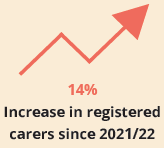
The number of Shared Lives carers has increased by 14% since 2021-22, with 10,477 registered Shared Lives carers this year.
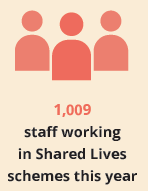
There were 1,009 staff working in Shared Lives schemes across the UK this year.
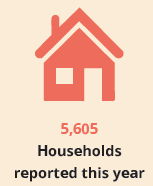
There were 5,605 Shared Lives households in the UK, suggesting some households include more than one carer.
The findings demonstrate the resilience of Shared Lives and its ability to continue developing in a challenging social care environment.
The longer-term data suggests that growth in the sector takes place at different levels. Developing scheme infrastructure and workforce capacity provides an important foundation for recruiting and supporting more carers, which in turn creates opportunities to support more people.
What’s in the UK report
The UK report focuses on:
- how many people Shared Lives supports across the UK and their support needs
- how Shared Lives arrangements are accessed (including live-in support, short breaks and day Shared Lives support)
- how the number of carers and the workforce are changing over time
- national insight into care leavers moving into Shared Lives
Using the findings
The State of Shared Lives reports are designed to support learning, planning and decision-making at local and national levels.
They are used by Shared Lives schemes, commissioners, policymakers and partners to:
- understand patterns of support and change over time
- identify opportunities for growth and development
- inform workforce planning and service design
- support the case for investment in Shared Lives
View the UK report
Earlier editions
You can explore previous editions of the State of Shared Lives reports in the archive.
Data transparency
This report draws on the best available data at the time of analysis, collected from Shared Lives schemes between 2021–22 and 2025–26, and supplemented by other sources where appropriate.
Data coverage and level of detail vary by area and by year.
This statement explains how we’ve used and presented data in the report, and what you should keep in mind when reading them.
The reports are based on responses from 142 Shared Lives schemes, alongside relevant external sources and historical data held by Shared Lives Plus.
We don’t have the same amount of data for every scheme or topic area. Differences in the amount or level of detail may reflect how data is collected or reported locally – as well as real differences in Shared Lives provision. In a small number of cases, we have good information for some measures but not for others. In these cases, high-level figures have been included to provide context.
As a result, figures cannot always be combined or compared directly. Where information was not available, we have shown this clearly as ‘no data’, rather than filling in the gaps based on assumptions.
We’ve taken this approach so the reports are useful without overstating what the data can tell us. The figures provide a broad picture, and you should not use them to make wider claims or comparisons.
Data collection and reporting for Shared Lives has improved over time. This report brings together more sources than earlier reports and uses a more consistent set of measures. However, some structural gaps remain, and progress should not be interpreted as completeness.
