Date published: November 26, 2026
Blog: What does empowerment mean to you?
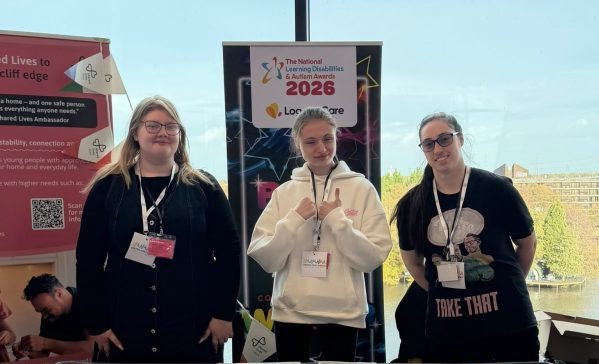
This year’s National Care Leavers’ Month theme is “Leading the Way: From Experience to Empowerment.” To mark the month, ambassadors for the Shared Lives for Young People Leaving Care programme, Katie, Vicky and Gracie, share in their own words what empowerment means to them.
Building confidence
Empowerment looks different from person to person. For Katie, Vicky and Gracie, it grows through opportunities to try new things, take on responsibility and have people around them who believe in what they can do.
Katie lives in the West Midlands and brings lived experience of both foster care and Shared Lives to her ambassador role. She supports Shared Lives events and recruitment and helps deliver autism training.
For Katie, empowerment comes through doing things she once might not have thought possible.
“Making my own bowling group, gaining part-time employment through Shared Lives Plus and helping my scheme have all empowered me. My mum and dad, my scheme and Shared Lives Plus have helped build my confidence, self-belief and the feeling that I can do it.”
Gracie lives in Rotherham and regularly speaks at events as a Shared Lives ambassador. She also supports her scheme as a buddy to young people coming into Shared Lives arrangements. Her carers are important role models.
“My empowerment has come from my carers. Watching them do things has inspired me. If they can do it, I can do it. Following in their footsteps has helped me know I can gain independence through my own journey, by seeing how they have managed to take life on.”
Vicky lives in Northampton and takes part in training, events and work to improve Shared Lives. She co-delivers Oliver McGowan training and has helped interview social workers and contribute to Shared Lives panels. Taking on these responsibilities helps build her confidence.
“I think it’s made me feel I am a person that people can look up to. That I’m really making a difference.
“Jane, my Shared Lives carer, has also really helped me, and Chris, my Shared Lives officer, has really helped me a lot. Doing events, training videos and promotion videos has developed my confidence. At the start I was so nervous and worried about how to do it, but now I feel more confident.”
Being heard
Having a voice matters, but so does knowing that someone will listen and act on what you say. For Katie, that means turning her idea for a bowling group into something real. For Vicky, one of those moments came from her involvement with a local performing arts school, where she was doing the lighting for a show.
“I got given the running order and I had to write what ideas I wanted to do for the lighting. I felt these are my ideas and they will be added into the show. I will know I designed it all. I felt really listened to, and I had a really good day because of that.”
For Gracie, speaking up during a difficult conversation led to a change in her support.
“I was able to explain how I present, what support I need and that I can’t always show this. I was able to advocate for myself in that moment and hadn’t done that before. This time I was really listened to. It was then raised with Shared Lives and my other carers, and my plan was updated, which helped make a change.”
Having choices
Young people leaving care can face big decisions about where they live, who supports them and what happens next. The ambassadors are clear that receiving support should not mean losing control over those decisions.
Katie believes young people should be able to make decisions for themselves.
“Even if it is the wrong decision, they should still be able to have the choice and make decisions for themselves.”
For Gracie, having a choice also means knowing you can disagree or say no.
“Having a choice and being listened to is so important. Having that choice heard means someone isn’t choosing for them.”
“The ability to say no and being allowed to put your foot down is so important. We know ourselves what is right and what is wrong for us. Young people will push away their own needs to please others or authority. It is so important to empower them to say no.”
Vicky’s past experience of supported living shapes her view of why this matters.
“Being able to have your own opinion is important. If you’re going to move somewhere and you go and view it, you need to feel safe and able to share your honest thoughts on it and whether you want to be there.”
“I never got a say on where I was put when placed in supported living. This took the control out of my hands.”
Her advice to other young people is simple:
“Speak up.”
Independence with people around you
We often think about independence as doing more for yourself, but for the ambassadors, the key is interdependence. Independence can grow from knowing there are trusted people around them. Vicky said:
“Now living with Jane, I feel independent whilst having the support I need.”
Katie said:
“It makes a young person trust a person and helps them to gain independence knowing someone is out there for them.”
For Gracie, those relationships can also make it feel safer to make choices and learn from mistakes.
“It sets young people up for the future and moving on, having your own family dynamic. Having these examples and role models allows for this.
“Having the freedom, trust and strong relationships allows choices to feel safer. Even if you make an unsafe choice for yourself, you have this support around you.
“Although carers can’t prevent mistakes or bad things happening, having the support allows the outcome to feel OK.”
What professionals can learn
For young people leaving care, important decisions can happen quickly or be driven by age-based transitions. Katie and Vicky say listening is key. Katie said:
“Listen to the voices of young people and the voices of the people who know them best. If they sound annoyed or frustrated, it is not aimed at you. It is around them wanting to be listened to and get the right help.”
Vicky said;
“Listen to any concerns the young person might have and wants to share with their social worker or carer.”
Turning experience into change
One aim of the ambassador role is to make sure lived experience shapes the Shared Lives for Young People Leaving Care programme.
Vicky said:
“Delivering our own lived experience sets an example for the outcomes of young people after us. It also gets people thinking about how to be better for young people, to help them become the best that they can be.
“Some care leavers have gone through such rough patches and want to be a better person. I’ve been able to become a better Vicky. It’s about knowing you aren’t alone in this.”
For Gracie, seeing other people share experiences similar to your own can offer hope.
“People see our stories and know they relate to them. To see our outcome, they will be hopeful for their outcome, which sets a really good example for life. Life has ups and downs and it does always get better.”
A message to young people leaving care
For young people approaching the transition from care into adulthood, the ambassadors’ final messages return to the same themes: ask questions, speak up and use the support around you.
Vicky said:
“If you have any questions or concerns, go and speak to people. Speak to your social worker, personal adviser (PA) or the people around you.”
Gracie said:
“I would tell young people it gets better.”
Katie said:
“I would say there is a light at the end of the tunnel.”
The ambassadors’ experiences show that empowerment is not one thing. It can mean having your opinion taken seriously, making your own decisions, trying something new or knowing someone is there when you need support.
Listen to Gracie talk more about her experience on the BASW Let’s Talk Social Work podcast.
Find out more about the Shared Lives for Young People Leaving Care programme.
